Sleep Disorders

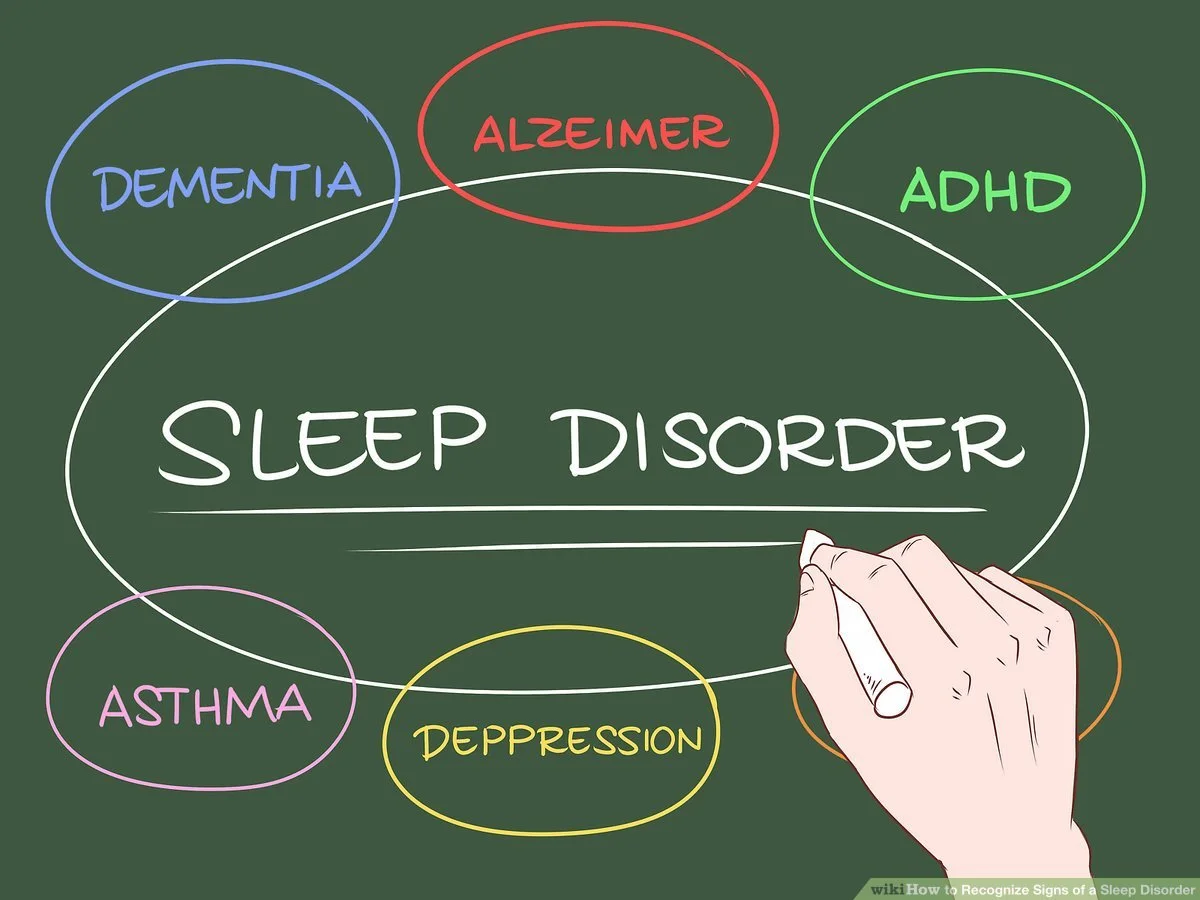
Are you one of the estimated 70 million people in the United States experiencing a sleep disorder? Sleep disorders are a broad category of medical conditions that negatively affect sleep.
Sleep disorders can disrupt an individual's ability to achieve consistent, restorative sleep. Sleep disorders can affect when you are able to fall asleep, how much sleep you get, and the quality of your sleep.
There are various types of sleep disorders, and we have highlighted some of the most common, along with a brief overview of each condition.
The most widely used system for classifying sleep disorders is produced by the American Academy for Sleep Medicine (AASM).
-
During sleep, the tissue at the back of the throat can sometimes narrow, causing the airflow to pass through a smaller opening. This can lead to vibrations of the surrounding tissues, resulting in snoring sounds. Such narrowing may occur in the nose, mouth, or throat.
While not all individuals who snore experience breathing difficulties, snoring combined with factors such as being overweight or obese may indicate a higher risk of Obstructive Sleep Apnea (OSA).
It is important to note that the loudness of snoring does not necessarily reflect the severity of airway obstruction. The most significant indicator of Sleep Apnea is the cessation of snoring, which suggests a pause in breathing.
-
Insomnia is a prevalent sleep disorder characterized by difficulty falling asleep, maintaining sleep, or both. It can be classified as either acute (short-term) or chronic (long-term). Acute insomnia is common and often occurs in response to situations such as work-related stress, family pressures, or traumatic events, typically lasting days or weeks.
Chronic insomnia persists for a month or longer. Most cases are secondary, meaning they are symptoms or side effects of underlying health issues. Factors such as medical conditions, medications, sleep disorders, and substance use can contribute to secondary insomnia.
Affecting as many as two-thirds of adults, insomnia is the most widespread sleep disorder in the United States. In fact, insomnia is one of the most common reasons why adults look for medical care.
Conversely, primary insomnia is not attributable to medical problems, medications, or other substances. It is a distinct disorder with an unclear etiology. Various life changes, including prolonged stress and emotional disturbances, can act as triggers for primary insomnia.
-
Hypersomnia, also known as excessive sleepiness, is a condition characterized by an individual's difficulty staying awake during daytime hours. Individuals experiencing hypersomnia may involuntarily fall asleep at various times throughout the day, including during work or while driving. Additionally, they may encounter other sleep-related issues such as decreased energy levels and impaired cognitive function.
-
Circadian rhythm sleep disorders involve disruptions in the timing of sleep and wakefulness. The human body’s primary circadian clock resides in the suprachiasmatic nucleus (SCN) within the brain. This internal clock governs various physiological processes, including body temperature, alertness, appetite, hormone secretion, and sleep patterns.
Individuals with circadian rhythm sleep disorders experience difficulties sleeping and waking at conventional times. When permitted to follow their natural biological schedules, they typically obtain sufficient sleep, and unless other sleep disorders are present, their sleep quality remains normal.
-
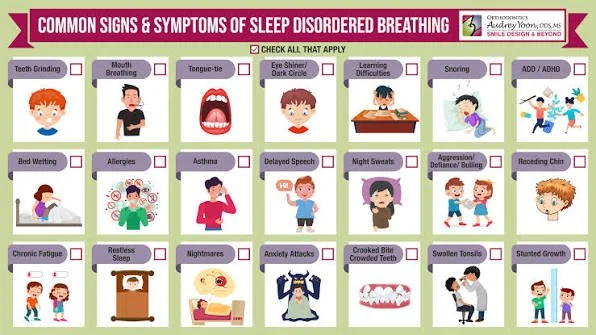
As the name implies, sleep-related breathing disorders are a category of sleep disorders in which a person experiences abnormal breathing during sleep. Researchers estimate that between 2% and 4% of adults have a sleep-related breathing disorder. One common condition is sleep apnea.
-
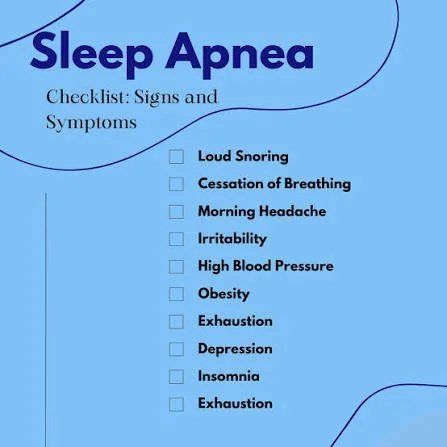
Obstructive Sleep Apnea describes repeated episodes in which breathing becomes shallow or stops during sleep. Episodes are caused by a blockage in the airway.
Sleep apnea is a prevalent condition characterized by pauses in breathing or shallow breaths during sleep. It is typically a chronic disorder that disrupts restful sleep, leading to decreased sleep quality and daytime fatigue. Sleep apnea is a significant contributing factor to excessive daytime sleepiness.
-
Central sleep apnea also involves periods of shallow or paused breathing. Unlike obstructive sleep apnea, though, this condition is caused by problems with the signals that are sent from the brain to control breathing.
-
Periodic Limb Movement Disorder (PLMD) is a condition characterized by involuntary and recurrent twitching or movement of the legs or arms during sleep. It differs from normal muscle spasms or jerks that may occur occasionally when falling asleep. These limb movements typically occur at intervals of 20 to 30 seconds, occurring five or more times per hour throughout the night during non-REM sleep. The movements generally involve rhythmic partial flexing of the big toe, ankle, knee, and sometimes the hips.
PLMD can coexist with other sleep disorders and is often associated with restless legs syndrome; however, they are distinct conditions. Restless legs syndrome entails uncomfortable sensations in the legs (and sometimes the arms) while awake, accompanied by an irresistible urge to move the limbs to alleviate these sensations. While at least 80% of individuals with restless legs syndrome also experience PLMD, the reverse is not necessarily true.
-
Narcolepsy is a chronic neurological disorder that affects the central nervous system's ability to regulate sleep. Individuals with narcolepsy often experience disrupted sleep, which can be mistaken for insomnia, as well as irregular REM (rapid eye movement) sleep.
This condition impacts approximately 1 in 2,000 people. Symptoms typically begin between the ages of 10 and 25. Research suggests that narcolepsy has a genetic component. Although it is a lifelong condition, it generally does not worsen over time. Nevertheless, narcolepsy is a serious disorder that can have significant physical, mental, and social effects.
-
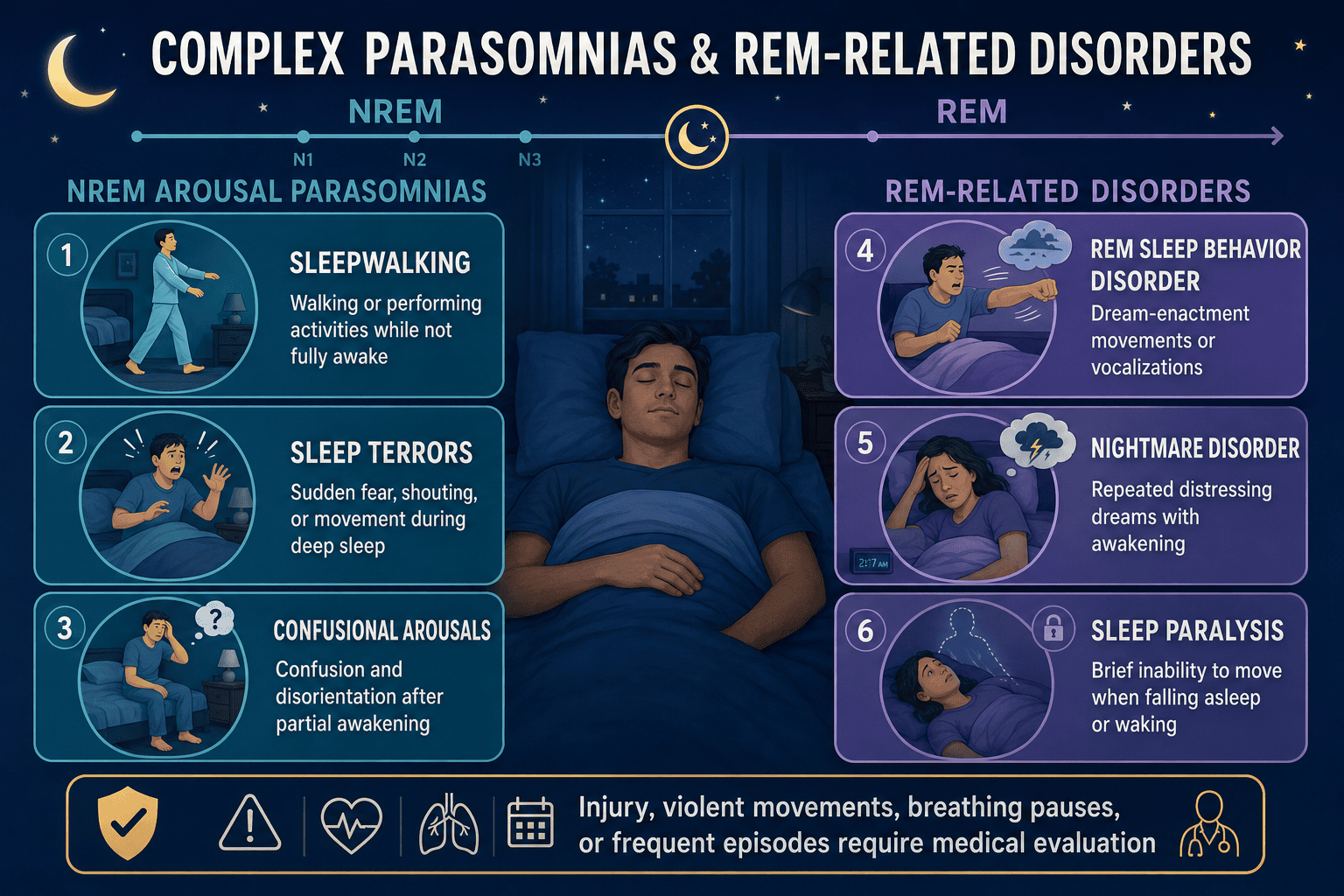
A night terror is a sleep disruption that seems similar to a nightmare, but with a far more dramatic presentation. During a typical night, sleep occurs in several stages. Each is associated with particular brain activity, and it's during the rapid eye movement (REM) stage that most dreaming occurs.
Night terrors happen during deep non-REM sleep. Unlike nightmares (which occur during REM sleep), a night terror is not technically a dream, but more like a sudden reaction of fear that happens during the transition from one sleep phase to another.
Night terrors typically occur in children but can occur in adults.
-
Sleepwalking, also known as somnambulism, is a sleep disorder characterized by individuals getting out of bed and walking during sleep. These episodes generally occur during the deep stages of sleep. During an event, the individual is typically unresponsive and has no memory of the sleepwalking activity.
In certain cases, sleepwalking may be accompanied by incoherent speech. Although more common in childhood, sleepwalking can persist into adulthood. Factors such as genetics, medications, medical conditions, and other sleep disorders may contribute to or trigger sleepwalking episodes.cription